A pool barrier changes the way a property works every day. It affects sightlines, circulation, supervision, guest experience, and how quickly a safe perimeter can be established when the pool is not actively in use. For high-end homes and hospitality settings across every warm-climate market globally, that decision is rarely just about checking a compliance box.
When comparing a motorized pool fence vs manual fence, the real question is not simply which costs less or installs faster. The better question is which system aligns with how the space is used, how often the barrier needs to change state, and how the applicable regulatory framework in the project’s market shapes what options are actually available.
The regulatory context shapes the comparison differently by market
The motorized vs manual comparison is not the same in every market, because the regulatory frameworks governing pool barriers treat the two categories differently.
In Australia and New Zealand, AS 1926.1 requires the barrier to be a permanent structure. This eliminates one of the most common “manual” options, the removable mesh fence, as a primary compliant barrier. The manual alternatives that remain viable under AS 1926.1 are permanently installed fixed fences: aluminum, steel, or glass. The manual fence in Australia is therefore a permanent enclosure, not a temporary or removable product. Motorized retractable systems in Australia require pre-submission discussion with the local council and a licensed pool safety inspector, because the permanent structure requirement creates a regulatory question that needs project-level resolution.
In France, both permanent and removable barriers are accepted under NF P90-306. A manual fence, whether permanent or removable, can satisfy the Raffarin Law if it meets the dimensional and gate behavior requirements of the standard. A motorized retractable system with equivalent deployed-state performance has the same compliance path. France is one of the most accommodating markets globally for both categories.
In South Africa, SANS 1390 focuses on performance requirements: height, gap, gate behavior. Neither permanence nor motorization is specifically mandated or excluded. Both manual and motorized systems compete on their deployed-state performance.
In the UAE and Gulf, Dubai Municipality requirements specify what the fence achieves, not how it achieves it. Both manual and motorized systems meeting the 1.2-metre height and gate behavior requirements are viable.
In the United States, the comparison is highly jurisdiction-specific. Some jurisdictions permit removable mesh as a primary barrier, making the manual category broadly available. Others require permanent structures, narrowing the manual field to fixed installations.
The core difference: designed behavior vs. behavioral dependency
A manual pool fence depends on someone doing something correctly every time the pool transitions from supervised use to unattended status. Someone closes the gate and waits for it to latch. Someone reinstalls the mesh section. Someone checks that the barrier is complete before leaving.
A motorized pool fence replaces that dependency with designed behavior. The gate closes automatically within a defined time window. The barrier deploys through a two-second activation rather than a multi-step physical process. The system does not rely on someone remembering, deciding, and executing correctly at the end of every swim session.
The behavioral science behind this distinction is well-documented. The UK Behavioural Insights Team identifies friction reduction as one of the most consistently effective behavioral interventions available across every domain where consistent human action is required. Pool safety is exactly that domain: the behavior that needs to be consistent, deploying the barrier every time the pool is unattended, is also the behavior most likely to be skipped when it carries any friction.
This is not a cultural observation. It applies in family homes in Sydney, managed villas in Bali, boutique hotels in Tuscany, and private residences in Cape Town with equal reliability. The friction that causes safety systems to be bypassed in one market causes the same failure in every other.
How the choice plays out in different global property contexts
Private family residences in Australia. The AS 1926.1 permanent structure requirement narrows the field. The choice is effectively between a permanently installed fixed fence (aluminum, steel, or glass) and a motorized retractable system that requires council engagement. For a design-forward harbourside property in Sydney where the pool is the spatial centrepiece, the motorized system addresses both the compliance obligation and the design aspiration. For a modest suburban pool where visual impact is secondary, a permanent aluminum fence is the simpler and more economical path.
Private villas in the UAE. Dubai’s luxury villa market, particularly in Palm Jumeirah, Emirates Hills, and Arabian Ranches, expects pool environments that read as resort-quality. A permanent visible fence is often architecturally out of step with villa design in these developments. The motorized system aligns with the design language while satisfying Dubai Municipality requirements in its deployed state.
Resort and boutique hospitality in Southeast Asia. In Bali, Phuket, and coastal Vietnam, luxury villa pools are the primary commercial asset. The pool photograph is the booking driver. Permanent fencing in any format competes visually with the design language of these properties, which draws from Balinese architecture, tropical modernism, and the seamless relationship between interior and exterior space. No mandatory national standard applies, but international guests, platform requirements, and insurer expectations create a de facto requirement for compliant barriers. The motorized system allows the property to present as architecturally open during supervised hours while maintaining protected operation during transition periods.
Hospitality properties in South Africa. Cape Town and Johannesburg luxury properties face SANS 1390 compliance obligations. In the Cape’s boutique hotel and guesthouse market, where outdoor spaces are key selling features and pool photography is central to marketing, the motorized system’s ability to disappear when not needed preserves the visual quality that drives bookings. Staff changeover protocols in a managed property context benefit from the auto-close gate function that eliminates the dependency on individual staff members remembering to latch.
Luxury residential in France. The Riviera, Provence, and Brittany luxury property market uses manual permanent fencing in most standard residential applications. Glass fencing is common in this market following the Australian model. For prestige properties where the pool terrace is a design focal point, motorized systems are increasingly specified for the same reasons they are chosen in Australia and the UAE: they preserve the view and the architecture while satisfying the Raffarin Law’s barrier requirements.
Daily use: the proof point for the comparison
The theoretical comparison between motorized and manual becomes practical the moment daily use begins.
In markets with mandatory re-inspection cycles, including Australia (two years in Queensland, at property transfer in NSW) and New Zealand, gate hardware performance is tested within a defined window. Non-performing gates are caught. In most other markets globally, the only catch mechanism is an incident review.
Manual gates across all fence categories rely on spring tension for auto-close function. That tension degrades. In pool chemical environments globally, from the chlorine and salt air of coastal Australia to the humidity of tropical Southeast Asia to the harsh UV of the Gulf, ferrous gate hardware corrodes faster than in standard outdoor conditions.
The motorized auto-close eliminates the spring tension failure mode. The gate closes through motorized function calibrated at commissioning. That function is tested and documented in the handover record. It either works correctly at handover or it is corrected before handover. There is no period of invisible degradation between an initial compliance check and the first re-inspection.
Design impact across global markets
The visual contrast between motorized and manual barriers is felt most acutely in markets where design quality is part of the property’s commercial value.
In Sydney, where harbourside properties command premiums largely based on the relationship between architecture and water, a permanent fence that cuts that relationship is a commercial problem, not just an aesthetic preference. In Dubai, where luxury villa development has produced one of the world’s densest concentrations of premium pool environments, architectural continuity between indoor and outdoor space is an expectation, not a luxury. In Cape Town, where Atlantic Seaboard properties combine extraordinary views with significant property values, a fence that reads as added-on reduces the visual quality that justifies the price.
A motorized retractable system addresses this by replacing permanent visual presence with conditional operation. When protection is not required, the housing sits flush with the deck surface and the landscape composition reads as intended. When protection is required, the fence deploys in seconds to its full barrier height.
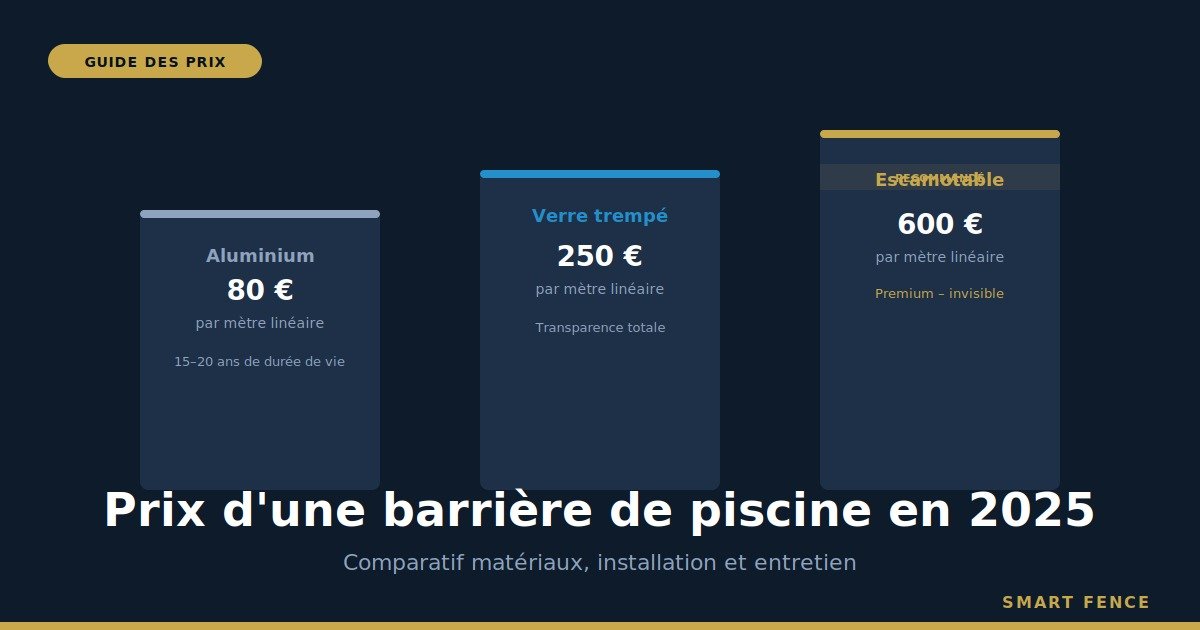
Cost comparison: beyond the purchase price
The cost comparison between motorized and manual fence changes significantly depending on which market the project is in, what labor costs apply, and what the full operational life of the installation looks like.
In Australia, high skilled trade labor rates mean that retrofit work around a completed pool deck is disproportionately expensive. A motorized system planned from the start of a new build has a different cost profile from a motorized system retrofitted after construction. The same is true of manual fence repairs and gate hardware replacement: labor cost makes maintenance expensive in Australian markets.
In the UAE, labor costs are lower relative to material costs. Manual fence installation and ongoing gate hardware maintenance is relatively inexpensive in labor terms. The premium for a motorized system over a manual permanent fence is less easily recouped through labor savings on maintenance. The case for motorization in Dubai is more design-driven and operational than cost-driven.
In France, moderate European labor costs mean that retrofit work is more expensive than new build coordination, but less extreme than in Australia. The long tradition of pool safety compliance under the Raffarin Law has produced a competitive market for both manual and motorized systems, with price points that reflect genuine competition.
In South Africa, lower labor costs reduce the operational premium of a motorized system relative to a manual fence, in rand terms. The material cost of the motorized system remains significant, but ongoing maintenance labor costs are lower. In the Cape Town luxury residential market, the design and hospitality case for motorization is stronger than the pure cost case.
Which option fits which type of property globally
For a modest residential pool in any market where the barrier will stay visible and the owner is comfortable with permanent fencing and manual gate operation, a manual fixed fence is typically the more economical path. It suits straightforward compliance requirements and uncomplicated daily use patterns.
For luxury homes and private villas in markets where the pool is a design focal point and visual openness is a commercial or aesthetic priority, the case for motorization is strongest in every market: Sydney, Dubai, Cape Town, Tuscany, the Côte d’Azur, Bali, Singapore.
For boutique hospitality in any warm-climate market globally, the operational argument for motorization is most compelling. Staff protocols, guest experience, liability management, and documentation requirements all favor a system whose gate behavior is designed rather than behavioral.
The right barrier protects people without diminishing the space it was built to serve. That standard is the same in every market. The system best positioned to meet it in luxury residential and premium hospitality environments is the one that makes protection as reliable as the rest of the property’s infrastructure.
Smart Fence approaches this with global project-based delivery: below-ground housing flush with the surrounding finish, automatic gate closure within 20 seconds of use, LED perimeter lighting that confirms system state, remote and app control with secure authentication, dry contact outputs for smart home integration in any protocol, and formal handover documentation structured for the applicable regulatory framework in the project’s jurisdiction.