A pool does not become safer because adults are attentive. It becomes safer when access is physically controlled. That is why the best child safe pool barrier options are not simply about appearance or price. They are about creating a reliable layer between a child and the water, every day, without depending on memory, routine, or supervision alone.
For luxury homes, boutique hospitality settings, and architect-led outdoor spaces, that decision carries another requirement. The barrier must protect without visually taking over the project. The right choice depends on how often the pool is used, how permanent the barrier needs to be, what local requirements apply, and how much visual openness the property should retain.
The global child safety case
Child drowning in private pools is a global problem, not a regional one. The WHO identifies drowning as the third leading cause of unintentional injury death worldwide, with children under five facing the highest risk. In residential pool environments specifically, the hazard is concentrated and consistent across every warm-climate market.
In Australia, drowning is the leading cause of accidental death for children under five. The Royal Life Saving Society Australia reports that residential pools account for the majority of child drowning deaths in that age group. This fact is what drove Australia to develop AS 1926.1, one of the most detailed residential pool barrier standards in the world, decades before most other markets created mandatory requirements.
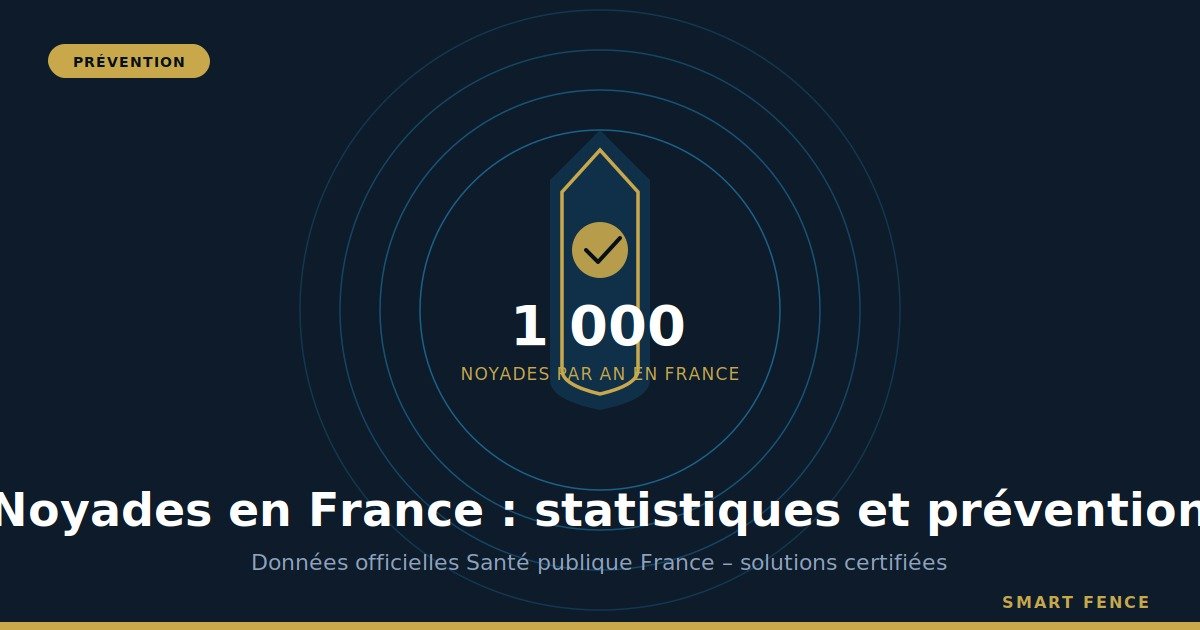
In France, the Raffarin Law of 2004 mandating pool safety barriers was passed specifically in response to child drowning data. Santé Publique France records between 1,000 and 1,400 pool drowning incidents annually, with children under six representing the most vulnerable group.
In South Africa, approximately 600 children drown each year, with private pools a significant contributing factor. SANS 1390, the South African pool barrier standard, was developed to address this directly.
In the UAE and Gulf, child drowning in private villa pools is consistently among the leading causes of accidental child death, driving Dubai Municipality and equivalent authorities to require pool barriers in private residential settings.
Across all of these markets, the research evidence converges on the same intervention: a four-sided isolation barrier that physically separates a child from the water, independent of adult supervision. The Cochrane meta-analysis of pool fencing studies found this produces an odds ratio of 0.27 for drowning compared with unfenced pools, translating to more than 73 percent risk reduction. The AAP, WHO, Royal Life Saving Society Australia, and Santé Publique France all identify four-sided physical barriers as the most effective single intervention available.
How different markets define “child safe”
What counts as a child-safe barrier is defined differently in each regulatory jurisdiction, and those definitions reflect the specific developmental observations that drove each country’s legislation.
Australia (AS 1926.1-2012). The standard sets a 1.2-metre minimum height, maximum 100mm gap at bottom and between vertical members, no climbable objects within 900mm of the fence exterior (the non-climbable zone), and gates that swing away from the pool with child-resistant self-latching hardware. The 900mm non-climbable zone is specifically sized to prevent a toddler from using adjacent objects as a climbing assist. The standard requires a permanent structure and cannot be satisfied by temporary or removable systems.
France (NF P90-306). The Raffarin Law requires that the barrier prevent access by children under five specifically. The gate must be impossible for a child under five to open from the outside. The barrier height minimum of 1.1 metres and gate latch behavior are calibrated to developmental capability at age four to five: a child at this age can reach approximately 900-950mm and can grip and operate simple latches at that height.
South Africa (SANS 1390). The standard requires a fence of at least 1.2 metres, no openings permitting passage of a 100mm ball, no footholds, and a gate that cannot be opened toward the pool with a self-closing self-latching mechanism and latch height minimum of 1.5 metres. The 1.5-metre latch height is higher than most comparable standards, reflecting research on child climbing capability for older children.
UAE/Dubai (Dubai Municipality). Requirements specify 1.2-metre minimum height, self-closing and locking gate, and gates opening away from the pool. The specific developmental calibration is less detailed than Australian or French standards, but the core principle of preventing unsupervised child access is the same.
United States (ISPSC). The 48-inch (approximately 1.2-metre) minimum height, 4-inch sphere rule for gaps, 54-inch minimum latch height, and self-closing self-latching gate requirements are calibrated similarly. Some states, including California and Arizona, require 60 inches (1.5 metres) minimum height, reflecting research on climbing capability in older children.
New Zealand (AS/NZS 1926.1). New Zealand follows the joint Australian-New Zealand standard, with the same 1.2-metre height, 100mm gap rules, and permanent barrier requirement.
What makes a pool barrier truly child safe: the universal criteria
Across all regulatory frameworks, the criteria for child safety converge on the same four dimensions.
Height adequate to prevent climbing. Research on child motor development shows that children aged 30 months can climb a one-metre fence given adequate horizontal hand and foot elements. The 1.2-metre minimum across most standards is calibrated to exceed what a toddler can scale with the non-climbable zone clear. California and Arizona’s 1.5-metre requirement addresses the capability of older children.
Gap control to prevent squeeze-through. The 4-inch (100mm) sphere rule reflects head circumference data for children under five. A child whose head cannot pass through an opening cannot access the pool through that opening. This applies to picket spacing, bottom clearance, and gate-to-post gaps.
Controlled gate access. A gate that a child cannot open from the outside, and that closes and latches automatically after every adult passage, is the most operationally critical element of the entire barrier. Gate failure is the most common compliance deficiency across every jurisdiction that inspects pool barriers, because mechanical gates degrade under outdoor exposure and human use cycles.
Non-climbable perimeter. The barrier must not provide footholds. This applies to the fence design itself and to every object placed within the non-climbable zone adjacent to the outside of the fence, including furniture, planters, landscape features, and pool equipment.
Best child safe pool barrier options for different properties
Removable mesh pool fencing
Removable mesh fencing creates a dedicated perimeter using vertical posts set into deck sleeves. The mesh is difficult for children to climb, and compliant systems include self-closing self-latching gates meeting applicable height and latch requirements.
Its appeal is straightforward in markets that permit it. In the US and France, removable mesh meeting the applicable standard (ASTM F2286 in the US, NF P90-306 in France) has a clear compliance path. In Australia and New Zealand, AS 1926.1 requires a permanent structure, which means removable mesh cannot serve as the primary compliant barrier for Australian projects. This is a market-specific distinction that affects the relevance of this option depending on where the project is located.
For design-conscious properties in markets where it is permitted, the trade-off is visual: deck sleeves remain visible when the fence is removed, and the fence itself reads as an added perimeter element rather than an integrated architectural feature.
Permanent aluminium or steel pool fencing
Metal pool fencing remains a standard choice in every market because it is durable, familiar to inspectors and certifiers, and widely available in code-compliant formats. The compliance path is well-established under AS 1926.1 in Australia, SANS 1390 in South Africa, and ISPSC in the US.
This option suits permanent enclosures where visual impact is acceptable and the architectural context accommodates a fixed perimeter. In markets with high inspection frequency, such as Queensland where re-inspection occurs every two years for rental properties, the durability advantage of permanent metal fencing reduces the risk of compliance drift from repeated handling damage.
The consistent limitation across all markets is permanence: the fence is always present regardless of whether the pool is supervised or in use, and it changes how the outdoor space reads from every viewing angle.
Glass pool fencing
Glass fencing is common across premium markets globally, particularly in Australia where it emerged as a design response to AS 1926.1, and in Dubai where luxury villa design emphasizes material continuity and visual openness.
From a child safety perspective, glass provides non-climbable surfaces when installed without external horizontal elements, and its transparency allows adults to see children near the pool from a distance. The child safety concern specific to glass is the passive psychology point: young children who encounter glass in domestic settings frequently do not recognize it as a physical barrier. This is not a code issue but a behavioral one, and it is most relevant in settings where very young children are present without constant direct supervision.
In coastal markets in Australia, the Gulf, and South Africa, glass hardware maintenance is an operational reality. Self-closing hinges lose tension and self-latching mechanisms can drift in pool chemical environments, and the gate that passed inspection can develop compliance issues without scheduled maintenance.
Pool safety covers
Safety covers can contribute to a layered protection strategy, but most regulatory frameworks position them as secondary to a perimeter barrier rather than substituting for one. Australia’s AS 1926.1 requires a permanent perimeter barrier regardless of cover. France’s Raffarin Law allows a safety cover as one of four compliant options but recommends the physical barrier as the only passive safety device. California requires at least two approved safety features.
The child safety limitation of covers is sequential: they protect the water surface but not the pool area. A child can reach the pool edge before the cover provides any protective function. The perimeter barrier is the intervention that prevents the child from reaching the pool at all.
Automatic retractable pool barriers
For high-end residential and hospitality environments, automatic retractable systems offer a distinct category: a physical barrier that is present when protection is required and absent when the space is in supervised use. The gate closes automatically within a defined time window, which eliminates the most common operational failure across all gate-based systems in every market.
The child safety advantage specific to retractable systems is the gate behavior. Traditional gates across all fence categories rely on mechanical spring tension for auto-closing function. That tension degrades under repeated use and chemical exposure. The retractable system’s gate closes through motorized function, which is calibrated at commissioning and verified at handover, rather than through passive spring tension subject to unmonitored degradation.
The compliance consideration varies by market. In the US, Australia (where the permanent barrier requirement requires specific discussion with the authority having jurisdiction), France, South Africa, and the UAE, the compliance path for retractable systems depends on whether the deployed performance meets dimensional requirements in the applicable standard. Pre-submittal meetings with the relevant authority are standard practice for novel barrier types in any market.
The regulatory dimension: compliance differs by country
One of the most practically important aspects of choosing between child safe pool barrier options is understanding that the compliance framework is not universal. A product that has a straightforward compliance path in the US may require additional regulatory discussion in Australia. A system that meets French NF P90-306 requirements may not meet Australian AS 1926.1’s permanent structure requirement.
For international buyers, developers, and hospitality operators working across markets, this means the barrier specification should be confirmed against the applicable national and local standard for each project location, not assumed from prior experience in another market.
The documentation that supports compliance also differs. In Australia, a licensed pool safety inspector issues a compliance certificate after physical inspection. In France, AFNOR product certification and installation records support compliance with the Raffarin Law. In South Africa, local council and insurer documentation requirements vary by municipality. In the UAE, Dubai Municipality inspects as part of the building permit close-out process.
For all markets, the handover documentation from the barrier installation should include: what standard the system is intended to meet, dimensional verification at the installed condition, gate function test records, and operating instructions. This documentation supports future inspections, property transfers, and any post-incident review, regardless of which country the pool is in.
Compliance is not optional, and it is not the same everywhere
Any selection of the best child safe pool barrier options should start with the applicable standard for the specific location and project type. Common dimensions and behavioral requirements appear across all markets, but height minimums, permanence requirements, and certification processes differ in ways that affect which products can be specified.
For residential developers, architects, and hospitality operators, this is where product quality and project documentation become critical. A barrier that appears secure may still fail regulatory review if it is not configured or installed correctly for the applicable standard. Code readiness should be built into specification, installation, and handover.
Premium projects benefit from a consultative process because geometry, finish levels, drainage, deck construction, and access control all affect the final outcome. Systems that include formal testing, calibration, and handover documentation are better aligned with that standard across every market.
Why aesthetics remains part of the safety decision in every market
Some buyers feel uncomfortable placing aesthetics alongside child safety, as if visual quality is secondary by definition. In reality, design fit influences long-term use in every market. A barrier that owners dislike is more likely to be removed, bypassed, or treated as temporary. A barrier that integrates cleanly into the property is more likely to remain in service as intended.
This is especially true in luxury residential and hospitality environments globally, whether in Sydney, Dubai, Cape Town, or Tuscany. The strongest protection strategy is one that people will actually keep active, maintain properly, and accept as part of daily living or guest operations.
Smart Fence approaches this as an engineered architectural system applicable across global markets: below-ground housing flush with the surrounding finish, automatic gate closure within 20 seconds of use, LED perimeter lighting that confirms system state, remote and app control with secure authentication, dry contact outputs for smart home integration in any protocol, and formal handover documentation structured for the compliance requirements of the applicable jurisdiction. When a pool barrier is selected with both child safety and design quality as non-negotiable requirements, it stops feeling like a compromise and starts behaving like part of the design.