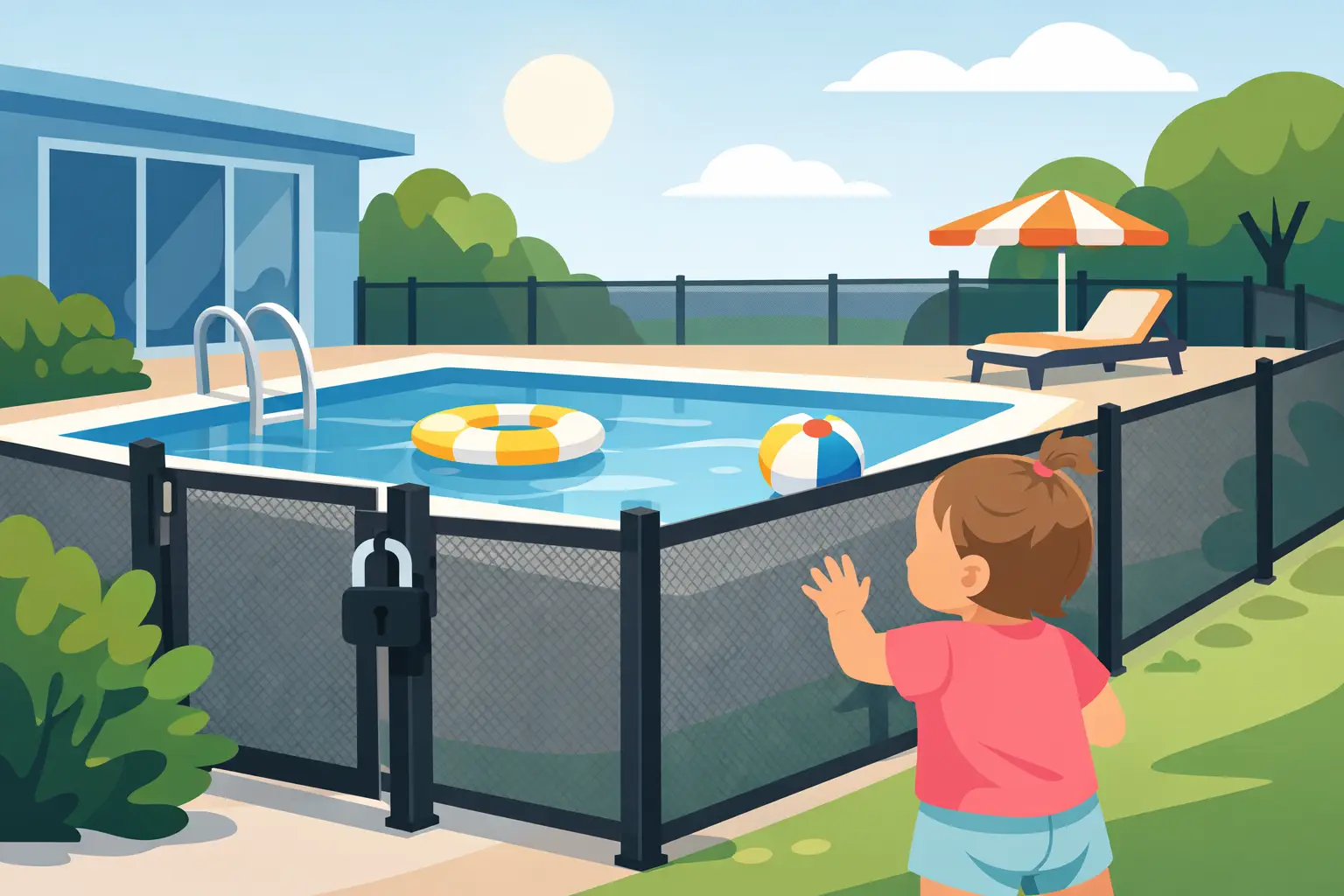

A pool does not become safer because adults are nearby. It becomes safer when access is controlled before a toddler reaches the water. That is the real answer to how to prevent toddlers accessing swimming pool areas – not supervision alone, not signs, and not good intentions, but a physical barrier strategy designed to stop unsupervised entry.
For families, property managers, and design professionals, the challenge is rarely awareness. It is execution. Many pool environments are visually open, architecturally refined, and constantly in use. That makes safety decisions more demanding. The right solution has to protect children, support compliance, and still respect the space.
How to prevent toddlers accessing swimming pool areas starts with barriers
Toddlers move quickly, climb unpredictably, and do not recognize risk. That is why every serious pool safety plan starts with separation. If a child can walk from the house or patio to the pool edge without encountering a secured barrier, the setup is vulnerable.
A compliant pool barrier creates a controlled boundary around the water itself, not just around the property line. This distinction matters. Perimeter walls and garden fencing may define the lot, but they often do little to prevent a child from reaching the pool once they are already outdoors.
The most reliable approach is layered protection centered on a dedicated pool barrier. In practice, that means a fence or enclosure designed specifically for pool safety, with controlled points of entry and no easy footholds, gaps, or bypass points. The barrier should be treated as engineered protection, not garden decor.
For high-end residential and hospitality settings, the trade-off has traditionally been obvious: install a visible permanent fence and compromise the design, or keep views open and accept more exposure. That is exactly where retractable barrier systems have changed the conversation. A physical barrier still does the essential work, but it no longer needs to dominate the architecture when the pool is not in active use.
Why supervision is necessary but never sufficient
Parents and staff often assume active supervision will close the gap. It helps, but it is not a substitute for controlled access. Drowning incidents involving young children often happen during short lapses – a door left open, a call answered, a guest assuming someone else is watching.
That is why safety authorities consistently promote layers. Supervision is one layer. Swim instruction is another. Emergency response readiness matters too. But the first and strongest layer is preventing entry in the first place.
If you are deciding where to invest, start with what works when attention fails. A physical barrier is the only measure that can continue protecting the pool area when adults are distracted, absent, or managing multiple children at once.
What a toddler-resistant pool setup should include
A well-designed system combines several controls that work together. The barrier is primary, but it should sit within a broader access strategy.
A dedicated physical barrier
This is the foundation. The barrier should isolate the pool from the home, lawn, and entertaining zones as much as the site allows. Gates or access points should be self-closing, self-latching where applicable, and positioned to reduce the chance of accidental entry.
The exact specification depends on local code, pool layout, and how the space is used. Some projects benefit from a permanent fence. Others, especially architect-led homes and boutique hospitality properties, require a retractable system that can secure the pool on demand while preserving a clean visual line when access control is not needed.
Controlled entry points
One weak gate can compromise the entire perimeter. Entry should be deliberate and limited. In family environments, this reduces the risk of a toddler following an adult through an unsecured opening. In hospitality settings, it supports operational control and liability management.
Remote and app-based operation can be useful here, but only if the system is secure and intentionally managed. Convenience should never mean casual access.
Door and gate alarms
Alarms are not barriers, but they are valuable secondary protection. They can alert adults when a child opens a door leading toward the pool area or when a gate is left unsecured. For larger homes and guest properties, that extra notice can make a meaningful difference.
Clear sightlines
Visibility matters, even when barriers are in place. Dense planting, decorative screens, and furniture layouts should not create hidden approach routes or obscure a child near the waterline. Good pool safety design protects without creating blind spots.
Design matters because safety systems fail when people avoid using them
Many pool safety products are technically effective but poorly matched to the property. They interrupt views, complicate circulation, or clash with the architecture. Over time, that often leads to inconsistent use, workarounds, or delays in deploying the barrier.
That is a serious issue. A safety measure only protects when it is in place at the moment it is needed.
In premium environments, design integration is not cosmetic. It is operational. If the barrier feels intrusive, owners may leave it open for gatherings, postpone reinstalling removable sections, or resist enclosing the pool at all. By contrast, a system that is built into the landscape and activated as needed is more likely to become part of the property’s normal safety routine.
This is the appeal of concealed, retractable pool protection. It delivers a real physical boundary when the pool must be secured, then retracts below ground when open access and unobstructed views are appropriate. For clients who expect both protection and architectural restraint, that balance is not a luxury extra. It is often the deciding factor.
How to prevent toddlers accessing swimming pool spaces without compromising design intent
The best answer is to specify safety early. Retrofitting after the pool, paving, drainage, planting, and lighting are complete almost always creates more compromise. Barrier placement becomes awkward. Power routing gets harder. Integration looks added on rather than resolved.
When pool safety is considered during design development, the result is cleaner and more effective. The barrier can follow the true geometry of the pool. Housing can be concealed within the landscape build-up. Operating zones, circulation paths, and control points can be planned rather than improvised.
For architects, developers, and discerning homeowners, this early coordination also supports compliance documentation and testing. That reduces risk at handover and avoids the common problem of trying to make a decorative landscape satisfy a regulatory function it was never designed to meet.
Smart Fence approaches this as a specification-led architectural system, with below-ground integration, modular geometry, controlled activation, and formal testing aligned with project delivery. That framing matters because pool safety should be treated as engineered infrastructure, not an accessory purchase.
Common mistakes that leave gaps in protection
The most common failure is relying on the property boundary instead of isolating the pool itself. The second is assuming adults will always notice a child moving toward the water. The third is choosing a barrier that is so visually disruptive or inconvenient that it is not used consistently.
There are also smaller but critical oversights: climbable furniture placed near the fence, gates that do not latch reliably, landscaping that creates access points, and temporary periods during maintenance or entertaining when the pool is left exposed. Toddlers do not need a major opening. They need one missed detail.
This is why periodic review matters. As children grow, they become more capable climbers and more curious explorers. As properties evolve, furniture, planting, and traffic patterns change. A pool barrier strategy should be checked as part of routine property management, not only after an incident or inspection.
Compliance is part of protection, not separate from it
Pool safety regulations vary by jurisdiction, and no single article can replace local code review. Still, the principle is straightforward: compliant barriers exist because access control saves lives. Treating code as a minimum checkbox misses the point.
For homeowners, compliance supports peace of mind and insurability. For hotels, resorts, and managed properties, it also supports risk control, operational accountability, and defensible safety practice. Documentation, testing, and proper handover are not administrative extras. They are part of a credible protection strategy.
If your question is how to prevent toddlers accessing swimming pool areas, the practical answer is simple even if the execution requires care: isolate the water, control the entry points, add secondary alerts, and choose a system that will actually be used every day.
The right pool barrier should do more than satisfy a rule. It should make the safe choice the easy choice, every time the pool is not under direct adult control.