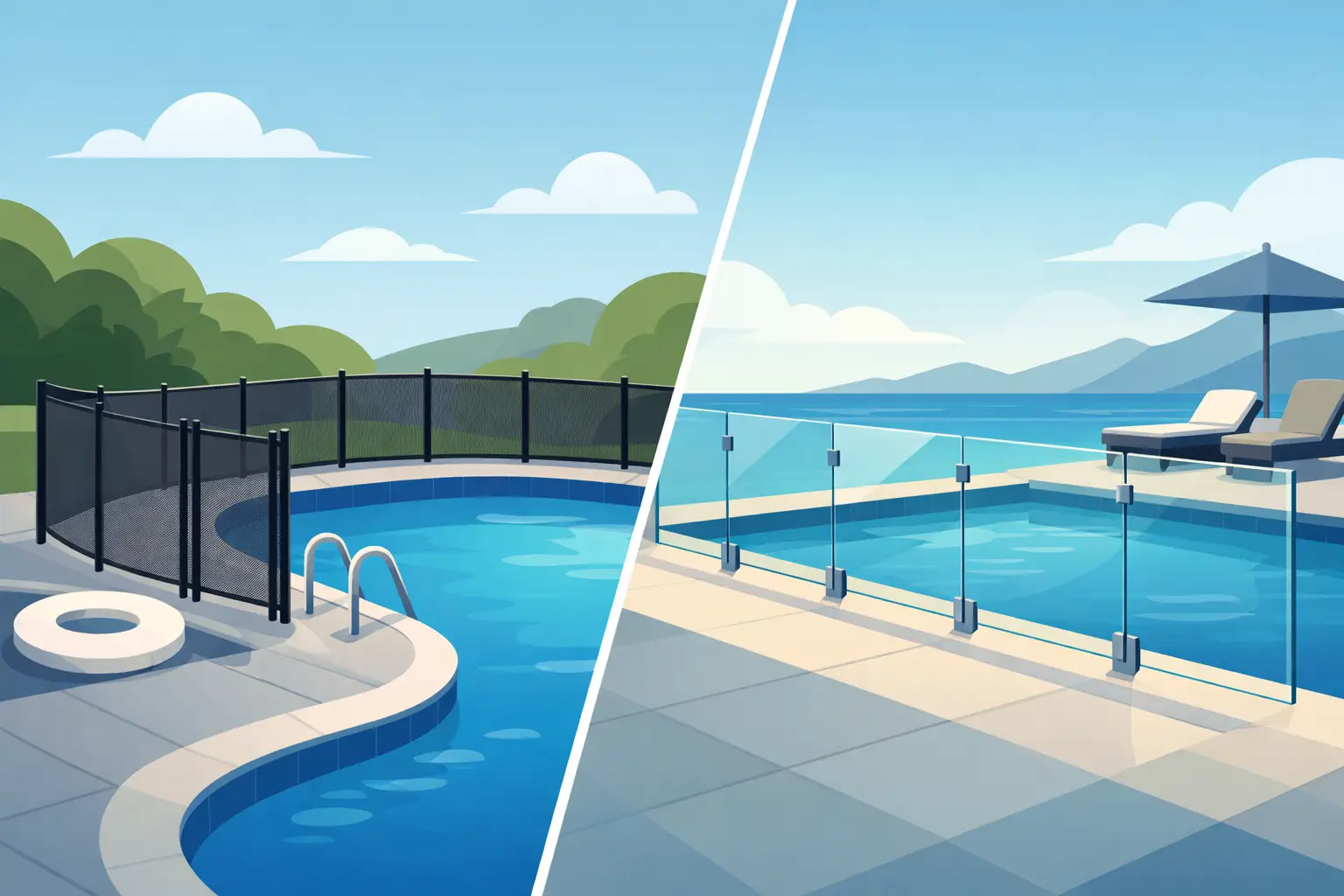

When a pool sits at the center of the landscape, the barrier decision shapes more than safety. In the automatic pool fence vs glass fencing debate, the real question is not simply which option looks better. It is which system protects people, satisfies code requirements, and preserves the architectural intent of the space.
For luxury homes, villas, and hospitality properties, that trade-off matters. A pool barrier is not a decorative add-on. It is a physical safety system with daily operational consequences. How it performs when children are nearby, how it affects sightlines, and how it integrates with the surrounding design all deserve close scrutiny.
Automatic pool fence vs glass fencing: the core difference
Glass fencing is a permanent visual boundary. It stays in place at all times, usually built from framed or frameless glass panels anchored around the pool perimeter. Its appeal is straightforward: clear views, a premium finish, and a familiar architectural language.
An automatic pool fence is different by design. It is an active safety system that rises when protection is needed and retracts out of sight when it is not. Rather than asking the project to accept a visible perimeter full time, it creates a compliant physical barrier on demand.
That difference changes the entire evaluation. Glass gives you constant presence. Automatic fencing gives you controlled presence. For some projects, that distinction is decisive.
Safety performance is about more than material
Glass is strong, durable, and widely used around pools. But its safety value comes from being a fixed barrier, not from the material itself. If the layout leaves gaps, if gate hardware is poorly managed, or if the fence line compromises circulation, the visual elegance of glass does not solve the operational problem.
Automatic fencing introduces another layer of control. Because the barrier can be activated when the pool is unattended, it aligns safety with actual use. That matters for households with children, properties with staff turnover, and hotels where guest behavior is not always predictable. The key advantage is not novelty. It is controlled deployment.
That said, a fair comparison requires nuance. A high-quality glass fence can absolutely support a safe, code-compliant pool environment when properly designed and maintained. It is also passive, which some owners prefer because it requires no activation. The trade-off is that the barrier remains visually present at all times, whether it is needed in that moment or not.
Design impact: visible barrier or invisible design
This is where the gap between the two systems becomes most obvious.
Glass fencing is often chosen because it is less visually heavy than metal or picket-style barriers. In many settings, that is true. It protects sightlines better than opaque fencing and can complement contemporary architecture. But it still draws a line through the landscape. Posts, channels, gates, and panel edges remain part of the composition.
An automatic pool fence changes that visual equation. When retracted, the barrier disappears into a concealed below-ground housing. The pool, terrace, planting, and view corridor read as originally designed. For architect-led projects, that matters. The barrier does not become a permanent instruction imposed on the layout. It becomes a controlled system that supports the design without dominating it.
For homeowners who invested heavily in hardscape, waterline detailing, or long views, this distinction is not cosmetic. It affects how the entire outdoor environment feels. A glass fence may be minimal. A retractable barrier can be absent when safety conditions allow.
Compliance and regulatory planning
Pool barriers are regulated for a reason. In both residential and hospitality settings, the barrier must function as a real safeguard, not just a visual marker. That means the comparison between automatic pool fence vs glass fencing should always be grounded in local code requirements, project geometry, and approval pathways.
Glass fencing is commonly accepted when it meets height, gate, latch, and spacing requirements. Because it is familiar to many installers and reviewers, it can feel like the straightforward route.
Automatic systems require more technical coordination, but that does not make them less suitable. In fact, on premium projects, a system-based approach can be an advantage because it is specified, calibrated, tested, and documented as part of installation. The barrier is not improvised on site. It is engineered to match the pool geometry and intended operation.
This is especially relevant for architects, developers, and hospitality operators who need a clear compliance narrative. A premium retractable system should not be evaluated as a gadget. It should be evaluated as a barrier solution with controlled operation, formal handover, and documentation for regulatory review.
Day-to-day use tells a different story than showroom appeal
Glass fencing photographs well. So does a clean, open pool deck with no visible barrier at all. The better question is what each system feels like after months or years of use.
A fixed glass fence creates a permanent circulation pattern. Every entry point is controlled by a gate. Every maintenance task happens around a visible perimeter. Furniture layouts, service access, and event use all adapt to that fixed line.
An automatic fence offers more flexibility. The barrier can be deployed when the pool is not actively supervised and retracted when open access is appropriate. For a private family home, that can mean stronger control during high-risk periods without sacrificing the openness of the yard the rest of the time. For a boutique hotel or private villa, it can mean securing the pool area quickly and cleanly without leaving a permanent enclosure at the center of the guest experience.
Of course, operational systems depend on reliability. The quality of engineering, weather resistance, calibration, and controls matters. A poorly designed retractable solution would create friction. A well-executed one reduces it.
Maintenance and aging in outdoor conditions
Neither option is maintenance-free.
Glass fencing requires regular cleaning to stay visually sharp. Water spots, fingerprints, salt exposure, and dust are part of the ownership reality. Hardware and hinges also need periodic inspection, especially in coastal or high-use environments.
Automatic pool fencing introduces a different maintenance profile. Because it includes moving components, owners should expect periodic service, inspection, and performance checks. In return, they avoid the constant visual maintenance of keeping a permanent glass perimeter looking pristine.
For many high-end properties, the decision comes down to which kind of maintenance is more acceptable. Some owners would rather clean glass than maintain a motorized system. Others would rather service an engineered barrier occasionally than live with a visible enclosure every day.
Cost is not just purchase price
Glass fencing can appear simpler on paper, but cost should be evaluated in context. Premium frameless glass, custom geometry, gate hardware, and installation complexity can push pricing up quickly.
Automatic fencing typically enters the project as a higher-spec architectural system. It involves site preparation, concealed housing, power connection, calibration, and final testing. That usually places it in a more premium category from the start.
But cost alone misses the strategic value. On a high-end project, the barrier is part of the design package, the compliance plan, and the user experience. If preserving uninterrupted views and architectural clarity is central to the brief, the cheaper option may not be the better value. It may simply be the more visible compromise.
Which option fits which project?
Glass fencing makes sense when a permanent transparent barrier is acceptable, the design can accommodate a fixed perimeter, and the owner prefers a passive solution with no activation step. It remains a credible and often attractive choice.
An automatic pool fence is better suited to projects where safety and aesthetics carry equal weight, where uninterrupted views matter, and where the owner or operator wants barrier control rather than barrier permanence. That is particularly true for luxury residences, architect-designed outdoor spaces, and hospitality settings where the pool should feel open when in use and protected when it is not.
For projects in that category, a system like Smart Fence at https://smrtf.com represents a different standard of pool protection – one that treats the barrier as integrated architecture, not visual compromise.
The right choice depends on what the project is trying to protect. If the goal is simply to place a code-compliant line around water, glass may be enough. If the goal is to deliver certified protection without giving up the space the design worked so hard to create, an automatic barrier deserves serious attention.
A pool fence should never be judged only by how it looks at installation. The better measure is how well it protects, how quietly it fits the architecture, and how confidently you live with it every day.